
Every homeowner eventually faces the same question: should I tackle this project myself or hire a professional? In today’s economy, where labor costs continue to rise and homeowners are looking for ways to stretch their budgets, the DIY-versus-hire decision has become more important than ever. While doing the work yourself can save money in some situations, it can also create unexpected expenses when a project goes wrong.
The reality is that misjudging a home improvement project often costs homeowners twice. First, there is the money spent on materials, tools, and supplies. Then there is the cost of correcting mistakes, replacing damaged materials, or bringing in a professional to finish a job that became more complicated than expected. What seemed like a money-saving opportunity can quickly become a financial burden.
The good news is that making smart decisions about home improvement projects is not just about knowing how much something costs. It is about understanding your skills, evaluating risk, and recognizing when professional expertise provides long-term value. This guide will help you determine which projects are ideal for DIY work, which require extra caution, and which should almost always be left to experienced professionals.
Know Your Skill Level Before You Know Your Budget

Before calculating project costs, homeowners should conduct an honest assessment of their abilities. Many people mistake watching online tutorials for having hands-on experience. While educational videos can provide valuable guidance, they rarely prepare someone for the unexpected challenges that arise in real projects.
There is a significant difference between understanding a process conceptually and successfully executing it. For example, painting a room after watching several tutorials may be straightforward, but replacing structural framing or installing complex systems involves variables that only experience can teach. Knowing where your skill level falls on that spectrum is essential.
One of the most expensive mistakes homeowners make is overestimating their abilities. A project that begins with confidence can quickly become overwhelming when hidden problems emerge. At that point, homeowners often need emergency assistance from contractors who must work around partially completed installations, damaged materials, or incorrect construction methods. These situations frequently result in higher labor costs than if a professional had been hired from the start.
Creating a personal skill inventory can help guide future decisions. Divide your abilities into categories such as painting, carpentry, landscaping, plumbing, electrical work, and general repairs. Record projects you have completed successfully and identify areas where you have little or no experience. This inventory becomes a practical reference whenever new home improvement opportunities arise.
As homeowners gain experience, their DIY capabilities naturally expand. However, budgeting should always be based on current skills rather than desired skills. A project budget built around reality is far more reliable than one built around optimism.
The True Cost of DIY (It’s More Than Materials)
Many homeowners underestimate the actual cost of DIY projects because they focus exclusively on material prices. Unfortunately, materials represent only part of the equation. Numerous additional expenses can significantly affect the overall budget.
Tool purchases and rentals are often the first surprise. Specialty saws, nail guns, concrete mixers, scaffolding, and power tools can add hundreds or even thousands of dollars to a project. While some tools become valuable long-term investments, others may only be used once.
Safety equipment is another frequently overlooked expense. Protective eyewear, gloves, respirators, hearing protection, harnesses, and work boots are essential for many projects. Skipping these items can create safety hazards that far outweigh any perceived savings.
Then there are the miscellaneous supplies homeowners rarely consider during initial budgeting. Items such as tarps, drop cloths, painter’s tape, fasteners, sealants, anchors, and cleanup materials can quickly increase costs. Even something as simple as purchasing additional bolts or replacement hardware can add up when multiple trips to the home improvement store become necessary.
Time is another major factor that many homeowners ignore. Every hour spent on a DIY project has value. Whether you spend weekends renovating a room or several evenings researching installation techniques, your time represents a real investment. When evaluating a project, consider what your personal hourly rate would be if that time were spent working, relaxing, or pursuing other priorities.
Mistakes also carry financial consequences. Improper measurements, installation errors, or damaged materials can require costly corrections. In some cases, a professional must be hired to undo and repair the mistake before the original project can continue. When that happens, the homeowner essentially pays twice for the same work.
Understanding the complete cost picture helps homeowners make more informed decisions. Sometimes DIY truly offers significant savings. Other times, hiring a professional from the beginning proves to be the more economical choice.
When to Always Hire: Projects Involving Structural Integrity
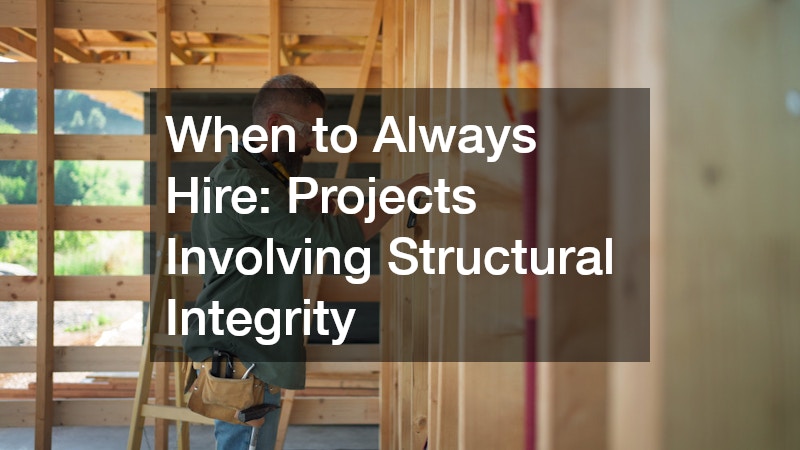
Certain projects should rarely be approached as DIY endeavors because the risks are simply too high. Any work affecting a home’s structural integrity falls into this category.
Load-bearing walls, foundation systems, roof framing, floor joists, and major support structures all play critical roles in maintaining a home’s stability. Altering these elements without proper analysis can compromise safety and create extensive repair costs. This is why consultation with a structural engineering professional is often necessary before beginning major renovations.
Structural issues involve more than physical safety. Building permits, code compliance, and legal liability also come into play. Unpermitted structural modifications can complicate future home sales and create significant obstacles during inspections. Buyers may request costly repairs or refuse to proceed with a transaction altogether.
Insurance considerations add another layer of complexity. If a structural failure occurs because of unauthorized or improperly completed work, insurance coverage may be limited or denied. The resulting financial exposure can far exceed the cost of hiring qualified professionals initially.
Exterior Projects: Sorting the Doable from the Dangerous
Exterior improvements often provide excellent opportunities for DIY savings, but some projects are significantly more complex than they appear.
Painting, caulking, pressure washing, mulching, and basic landscaping are among the most accessible DIY projects. These improvements can dramatically enhance curb appeal while requiring relatively modest investments in tools and materials. Many homeowners complete these projects with minimal risk.
However, larger exterior projects often require specialized expertise and equipment. Driveway resurfacing and paving are excellent examples. While patching small cracks may be manageable for homeowners, major repairs and repaving are best handled by an asphalt contractor. Proper grading, compaction, drainage, and material application are critical to long-term performance.
Fencing projects can fall into either category depending on scope and complexity. A small decorative garden fence may be manageable for a handy homeowner. However, large perimeter fences, sloped properties, challenging soil conditions, and local permitting requirements often make professional installation the better choice.
An experienced fence contractor understands property lines, setback requirements, post installation techniques, and material selection. Professional installation often results in greater durability and fewer maintenance issues over time. While the upfront cost may be higher, the long-term value frequently justifies the investment.
Interior Updates You Can Absolutely Do Yourself
Fortunately, many interior improvements offer excellent opportunities for DIY success. These projects typically involve lower risk while providing substantial visual impact.
Painting remains one of the most cost-effective home upgrades available. Fresh paint can completely transform a room’s appearance while requiring relatively basic tools and skills. Careful preparation and patience often matter more than technical expertise.
Hardware upgrades are another high-value DIY project. Replacing cabinet handles, door hardware, light switch covers, and decorative accessories can modernize a space without requiring extensive construction knowledge. These small changes often create a surprisingly significant effect.
Basic tile installations, such as backsplashes, can also be approachable for homeowners willing to invest time in preparation and precision. Starting with smaller projects allows DIYers to build confidence before attempting more advanced work.
Finish carpentry represents another area where homeowners can often succeed. Installing baseboards, crown molding, trim, and simple shelving generally requires patience more than specialized licensing. These upgrades add character and polish to interior spaces while remaining relatively budget-friendly.
Windows, Doors, and Insulation: A Mixed Bag

Some home improvement categories contain projects that range from beginner-friendly to highly specialized. Windows, doors, and insulation fall squarely into this group.
Weatherstripping and caulking are excellent DIY projects. These improvements reduce drafts, improve energy efficiency, and require minimal investment. Most homeowners can complete these tasks in a single weekend while achieving meaningful utility savings.
Door adjustments, hardware replacements, and minor sealing improvements also fit comfortably within DIY territory. These projects generally involve straightforward procedures and low risk.
On the other hand, full window replacement is a far more demanding undertaking. Proper installation affects energy performance, moisture management, structural integrity, and manufacturer warranties. Even small installation errors can result in air leaks, water intrusion, and long-term damage.
Professional installers understand flashing systems, weatherproofing requirements, and code compliance standards. Their expertise often protects homeowners from future repair costs that could exceed any initial DIY savings.
Metalwork, Fabrications, and Custom Features
Working with metal introduces an entirely different set of considerations. While some metal-related projects are approachable, others require advanced skills and specialized equipment.
Basic shelving brackets, decorative accents, and minor repairs using standard hardware can often be completed successfully by homeowners. Projects involving simple assembly and readily available bolts generally fall within the DIY category.
However, more advanced fabrication work requires significant expertise. Precision measurements, load calculations, welding techniques, and material selection all influence project success. This is particularly true when projects involve custom architectural features.
Professional steel fabrication shops possess equipment and capabilities that most homeowners simply do not have access to. Their work ensures accuracy, durability, and compliance with applicable standards. Attempting complex fabrication without proper training can result in costly mistakes or safety hazards.
One area where professional involvement is especially important is custom stairs and railings. These features are governed by detailed building code requirements related to dimensions, spacing, load capacity, and safety. Even minor deviations can create inspection failures or injury risks.
Because stairs and railings serve critical safety functions, professional design and installation should generally be considered non-negotiable. The cost of expert workmanship is small compared to the potential consequences of an improperly built system.
For homeowners considering custom metal features, professional fabrication typically delivers superior results while minimizing risk.
Demolition and Debris: Plan Before You Swing
Demolition often appears simple on television, but successful demolition requires planning, preparation, and caution. Before removing any materials, homeowners should identify utilities, structural elements, and potential hazards.
Many non-structural demolition tasks can be completed safely by homeowners. Removing old cabinets, flooring, trim, drywall, and fixtures often falls within DIY capabilities. Proper preparation helps prevent accidental damage to plumbing, electrical, and HVAC systems.
Containment is another critical consideration. Dust barriers, protective coverings, and tarps help reduce cleanup requirements and protect unaffected areas of the home. Investing in preparation frequently saves substantial time later.
Disposal planning is equally important. Some materials can be discarded through regular curbside trash pickup, while others require specialized disposal methods. Appliances, electronics, hazardous materials, paint, chemicals, and certain construction debris may have unique disposal requirements depending on local regulations.
For larger projects, homeowners must evaluate whether renting a dumpster makes financial sense. Dumpster rentals provide convenience and efficiency but add upfront costs. Self-hauling debris may appear cheaper initially, but fuel expenses, disposal fees, vehicle wear, and time commitments can quickly narrow the difference.
A careful comparison of project size, disposal requirements, and transportation logistics helps determine the most cost-effective approach. Planning debris management before demolition begins prevents delays and unexpected expenses.
Building Your Project Budget: A Decision Framework

Creating an effective home improvement budget starts with a simple decision framework. One practical approach is organizing projects into three categories: green, yellow, and red.
Green projects are ideal DIY candidates. These typically include painting, landscaping, weatherstripping, hardware replacement, basic trim installation, and other low-risk improvements. The consequences of mistakes are usually minor and inexpensive to correct.
Yellow projects require additional research and careful consideration. Examples include tile work, insulation upgrades, fencing projects, and some carpentry tasks. These projects may be suitable for experienced homeowners but can become problematic when skill levels are overestimated.
Red projects should almost always involve professional assistance. Structural modifications, major electrical work, foundation repairs, roofing, full window replacement, advanced steel fabrication, and custom stairs and railings belong in this category. The safety, legal, and financial risks are simply too significant.
Even if you intend to complete a project yourself, obtaining multiple contractor quotes can provide valuable information. Professional estimates establish a realistic benchmark for labor, materials, timelines, and project scope. These quotes often reveal considerations homeowners may have overlooked.
Finally, every homeowner should maintain a dedicated home improvement fund. Unexpected repairs are inevitable, and opportunities for upgrades frequently arise without warning. A well-funded reserve allows homeowners to make smarter decisions rather than reacting out of financial pressure.
The most successful home improvement budgets are not necessarily the smallest. They are the budgets that accurately balance cost, risk, skill level, and long-term value. By understanding what to DIY and what to hire out, homeowners can protect both their finances and their homes while achieving the results they want.